
The Brutal Truth About Modern Hiring
You spend hours creating the perfect resume. You adjust the font, add your skills, mention your achievements, and click “Apply” with hope. But within seconds, your application is gone from the recruiter’s screen. This is the harsh reality of today’s competitive job market. Recruiters reject resumes faster than most candidates can imagine.
The average recruiter receives hundreds of applications for a single role. With limited time and increasing pressure to hire quickly, recruiters reject resumes almost instantly when they spot common mistakes. Studies suggest recruiters spend only 6–10 seconds during the first scan of a resume. That means your entire career story must impress someone in less time than it takes to read a social media post.
If you have been applying for jobs and hearing nothing back, the problem may not be your qualifications. It may be the way your resume communicates your value. Understanding why recruiters reject resumes is the first step toward improving your chances of getting interviews.
This blog will uncover the biggest reasons recruiters reject resumes in seconds and how you can avoid those mistakes. Whether you are a student, fresher, graduate, or experienced professional, these insights can completely change your job search results.

Recruiters make snap judgments. Before they even read your experience, they notice the visual appearance of your resume. If the layout looks cluttered, outdated, or difficult to scan, recruiters reject resumes without reading deeper.
1. First Impressions Decide Everything

Think of your resume like a movie trailer. If the first few seconds fail to create interest, people move on. Recruiters behave the same way.
A strong resume should look clean, professional, and easy to understand. Hiring managers do not want to search for important information. They want quick clarity.
Common Visual Mistakes
- Too many colors and graphics
- Fancy fonts that reduce readability
- Huge paragraphs without spacing
- Tiny font size
- Excessive design elements
- Poor alignment
- Unprofessional photo usage
Recruiters reject resumes that create confusion because they assume the candidate may also create confusion in the workplace.
2. Generic Resumes Never Work
One of the biggest reasons recruiters reject resumes is because candidates use the same resume for every job application. Recruiters can instantly tell when a resume is generic. If your resume looks copied and pasted without customization, it signals low effort. Every company wants to feel that the candidate understands the role. A resume tailored to the job description performs far better than a mass-sent template.

For example, if a company is hiring a digital marketer and your resume focuses mainly on customer support skills, the recruiter may assume you are not serious about the position.
When applicants fail to customize, recruiters reject resumes because they do not see alignment between the candidate and the role.
How to Customize Effectively
- Match keywords from the job description
- Highlight relevant experience first
- Adjust your summary according to the role
- Mention skills related to the position
- Use industry-specific language
3. ATS Systems Filter Candidates Before Humans Do
Many people think recruiters personally read every resume. In reality, most companies use Applicant Tracking Systems, commonly called ATS software.
ATS tools scan resumes for keywords, formatting, and relevance. If your resume is not optimized, it may never even reach a recruiter.
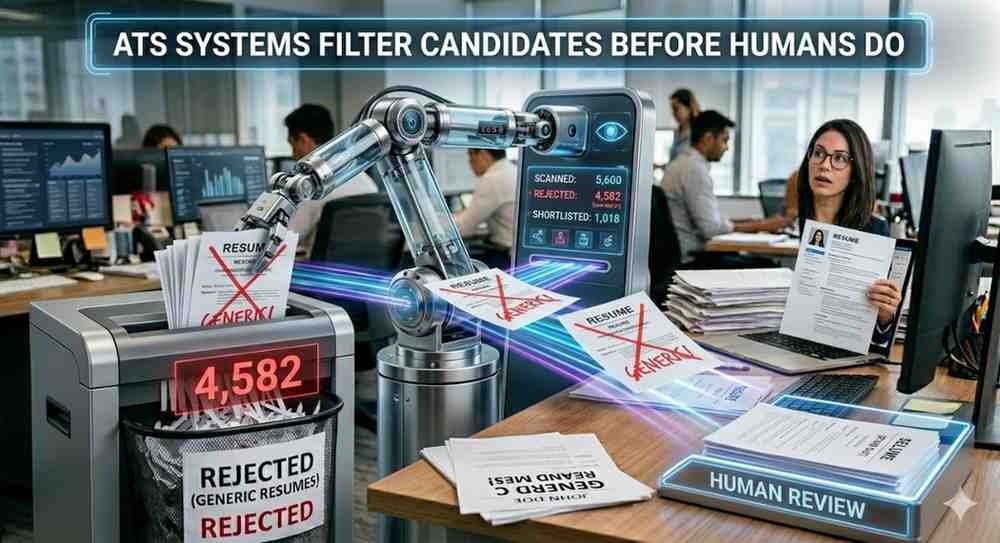
This is why recruiters reject resumes that lack proper keyword strategy.
ATS Mistakes That Hurt Candidates
- Using images instead of text
- Adding tables that confuse scanners
- Missing relevant keywords
- Uploading incorrect file formats
- Using unusual headings
- Overdesigning the resume
If the job description mentions “project management” and your resume never includes that phrase, ATS software may rank your application lower.
To avoid this issue:
- Use standard headings like Education, Skills, and Experience
- Include relevant keywords naturally
- Save your file as PDF unless instructed otherwise
- Keep formatting simple
Recruiters reject resumes that ATS systems cannot properly read because those applications never appear as strong matches.
4. Lack of Achievements Makes Resumes Weak

Many resumes only list responsibilities. That is a huge mistake.
Recruiters want proof of impact. They do not just want to know what you did. They want to know how well you did it.
For example:
Instead of writing: “Managed social media accounts.”
Write: “Managed social media accounts and increased engagement by 45% in three months.”
The second version immediately sounds more impressive.
Recruiters reject resumes filled with vague statements because they fail to demonstrate measurable value.
Strong Achievement Examples
- Increased sales by 20%
- Reduced operational costs
- Improved customer satisfaction scores
- Led successful campaigns
- Achieved academic distinctions
- Managed events with large participation
Numbers build credibility. Data grabs attention.
When recruiters reject resumes, it is often because the candidate talks about duties instead of outcomes.
5. Spelling and Grammar Errors Destroy Credibility
A single typo can damage your chances.
Recruiters reject resumes with spelling mistakes because such errors suggest carelessness, lack of professionalism, or poor communication skills.
Imagine applying for a corporate role while your resume contains grammatical errors. The recruiter may immediately question your attention to detail.

Common Resume Mistakes
- Wrong company names
- Misspelled words
- Incorrect punctuation
- Grammar issues
- Inconsistent formatting
- Capitalization errors
Always proofread your resume multiple times.
You can also:
- Use grammar checking tools
- Ask friends to review it
- Read it aloud slowly
- Double-check dates and names
- Small mistakes create a negative impression quickly. That is why recruiters reject resumes that appear rushed or careless.
6. Irrelevant Information Wastes Valuable Space
Recruiters do not need your entire life story. One major reason recruiters reject resumes is because candidates include unnecessary information. Your resume should focus only on content relevant to the role.
Information You Should Avoid
- Long personal descriptions
- Irrelevant hobbies
- Outdated skills
- Excessive school details
- Family information
- Unrelated work experience
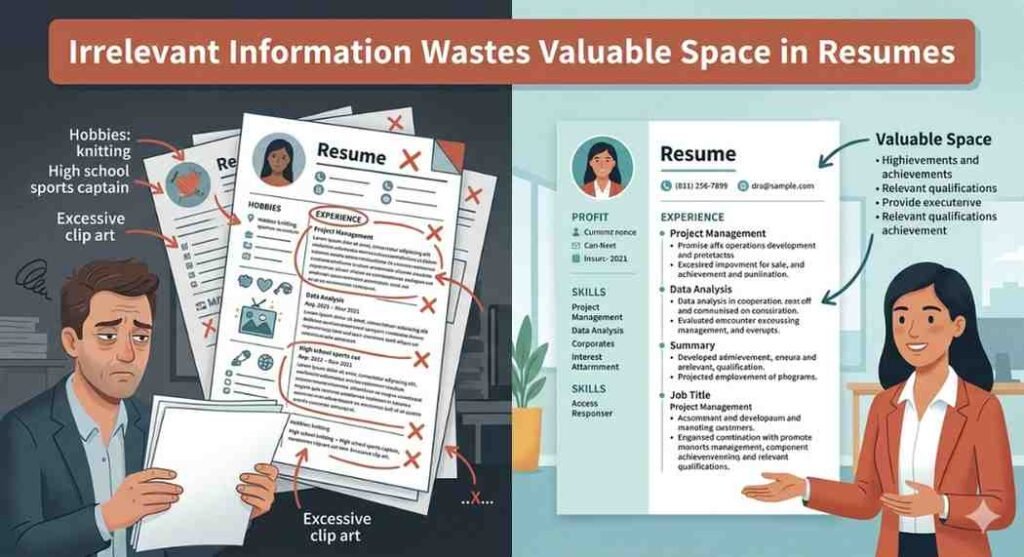
For example, if you are applying for a finance internship, the recruiter probably does not need detailed information about your middle school achievements.
Keep your resume focused and strategic.
Recruiters reject resumes overloaded with irrelevant content because they make it harder to identify valuable qualifications.
7. Weak Resume Summaries Fail to Grab Attention
Your resume summary is one of the first things recruiters read. If your summary sounds boring, generic, or unclear, recruiters reject resumes almost immediately.
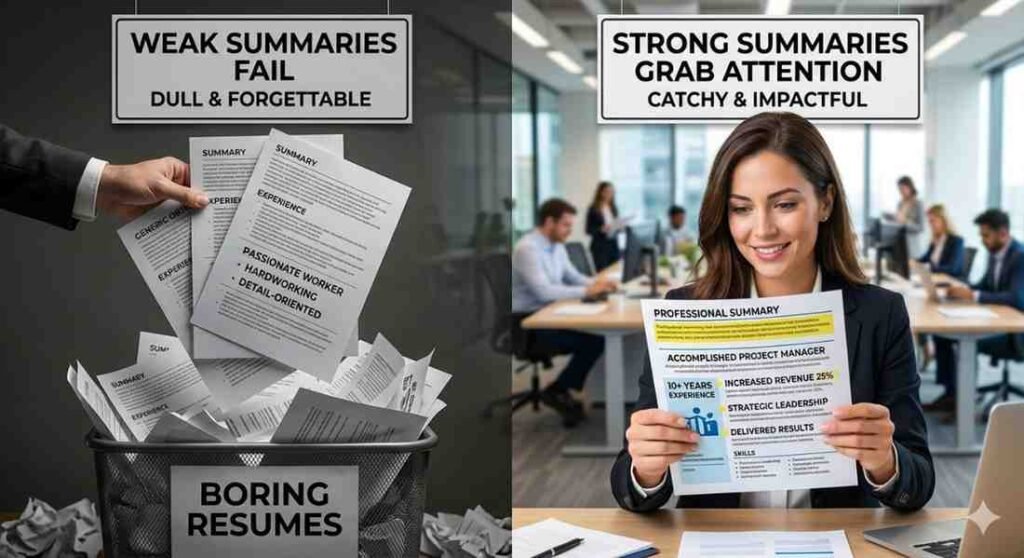
Weak Summary Example
“Hardworking individual seeking opportunities to grow.”
This statement says almost nothing.
Better Summary Example
“Results-driven marketing graduate skilled in social media strategy, content creation, and campaign analytics with experience increasing audience engagement for student-led brands.” The second version communicates skills, direction, and value.
A strong summary should:
- Highlight your strengths
- Mention relevant skills
- Show career direction
- Include measurable achievements when possible
Recruiters reject resumes with weak openings because they fail to spark interest.
8. Poor Formatting Creates Instant Rejection
Formatting matters more than many people realize.
Recruiters reject resumes that are difficult to scan because recruiters spend only seconds reviewing each application.

Good Resume Formatting Includes
- Clear headings
- Bullet points
- Consistent spacing
- Professional fonts
- Easy readability
- Proper section organization
Bad Formatting Includes
- Huge text blocks
- Random font changes
- Crowded sections
- Misaligned content
- Decorative backgrounds
A recruiter should be able to quickly find:
- Your skills
- Experience
- Education
- Achievements
- Contact details
- If they struggle to find information, recruiters reject resumes and move to the next candidate.
9. No Keywords Means Low Visibility
Keywords are essential in modern hiring.
Recruiters reject resumes that lack industry-relevant keywords because ATS systems prioritize applications matching the job description.
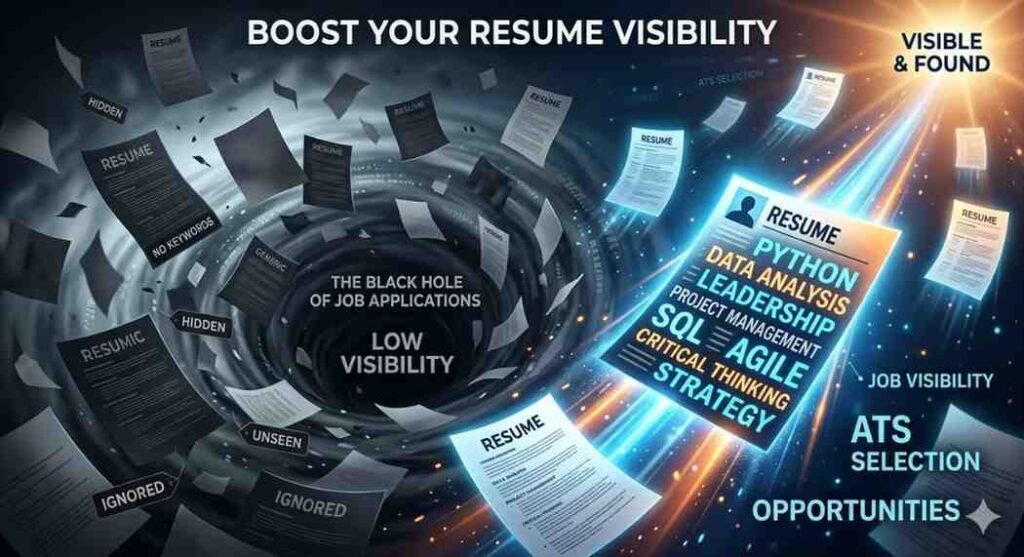
For example, if a company wants someone skilled in:
- Data analysis
- SEO
- Python
- Financial modeling
Your resume should naturally include those keywords if you genuinely possess those skills.
Where to Place Keywords
- Resume summary
- Skills section
- Work experience
- Certifications
- Projects
Do not stuff keywords unnaturally.
The goal is balance.
Recruiters reject resumes when important skills are missing because the application appears irrelevant to the role.
10. Too Long or Too Short Resumes Hurt Your Chances
Resume length matters. A resume that is too long overwhelms recruiters. A resume that is too short may fail to communicate enough value. Recruiters reject resumes that waste time.
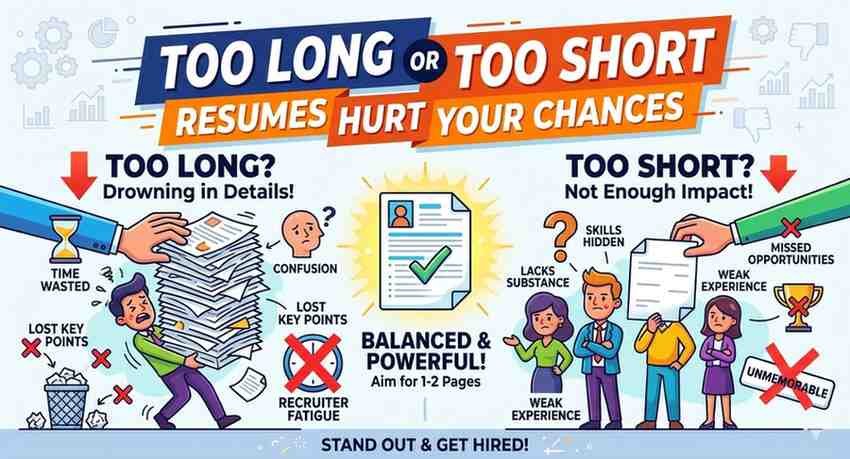
Ideal Resume Length
- Freshers: 1 page
- Experienced professionals: 1–2 pages
Every line should add value. Avoid unnecessary details just to make your resume longer. At the same time, do not remove important achievements just to keep it extremely short. The key is strategic balance.
11. Career Gaps Without Explanation Raise Questions
Employment gaps are not always bad. But unexplained gaps can create doubt. Recruiters reject resumes when timelines seem confusing or suspicious.
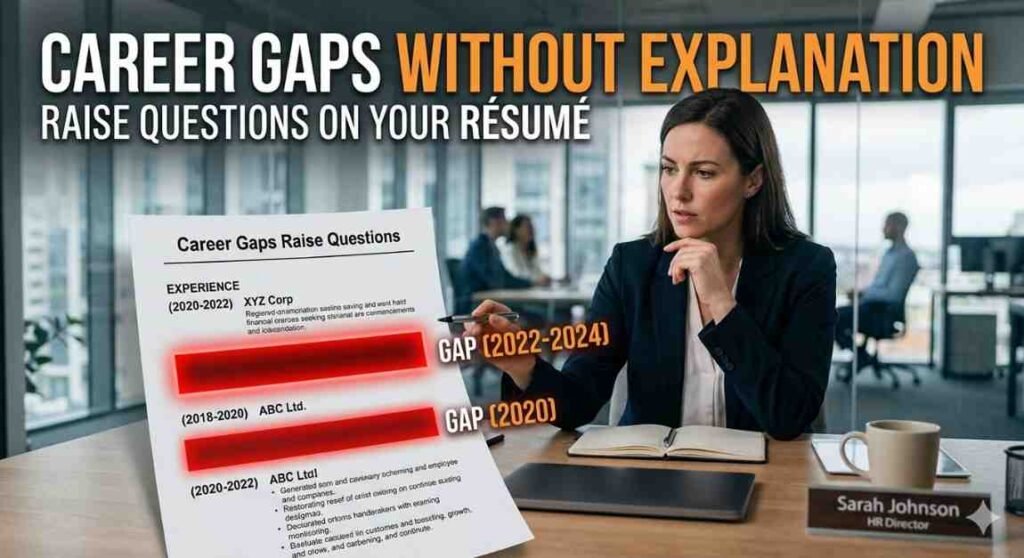
If you took time off for:
- Education
- Family responsibilities
- Freelancing
- Skill development
- Health recovery
You can briefly mention it professionally.
For example: “Completed certification programs during career transition period.” Transparency builds trust. Recruiters reject resumes with unclear timelines because uncertainty increases hiring risk.
12. Overused Buzzwords Sound Empty
Words like:
- Hardworking
- Passionate
- Team player
- Dedicated
- Motivated
appear in thousands of resumes.
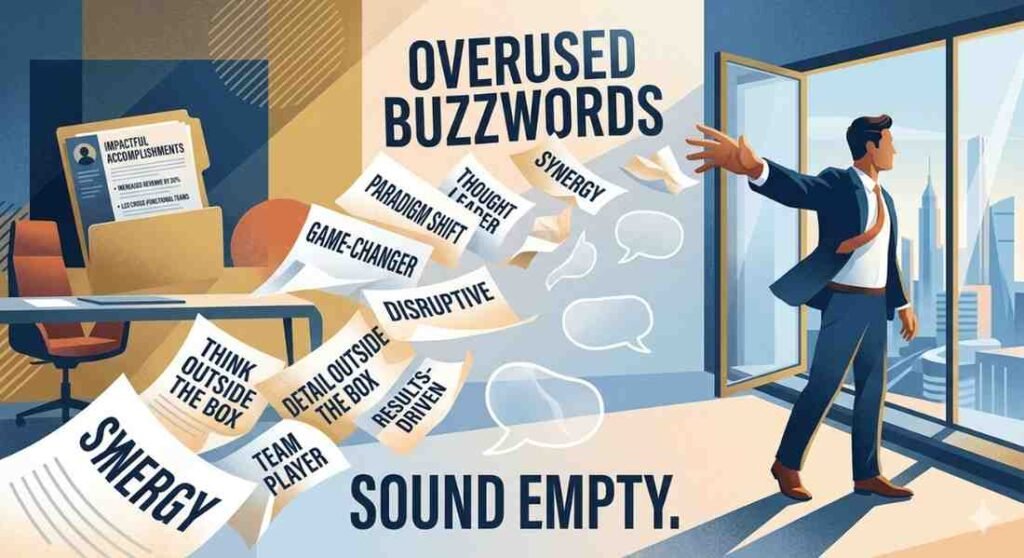
Recruiters reject resumes filled with buzzwords because they lack evidence. Instead of saying you are “hardworking,” show achievements that prove it. Instead of saying you are “creative,” mention successful projects. Evidence matters more than adjectives.
Lack of Digital Presence Can Be a Red Flag

In today’s digital world, recruiters often check LinkedIn profiles and online portfolios.
Recruiters reject resumes when online profiles appear unprofessional or incomplete.
Improve Your Online Presence
- Update LinkedIn regularly
- Add certifications
- Showcase projects
- Use a professional photo
- Build a portfolio if relevant
For creative, technical, and marketing roles, portfolios can significantly improve interview chances.
A strong digital presence supports your resume and strengthens credibility.
13. Applying Randomly Reduces Success
Many candidates apply to hundreds of jobs without strategy. Recruiters reject resumes that clearly do not match the role. Quality matters more than quantity.
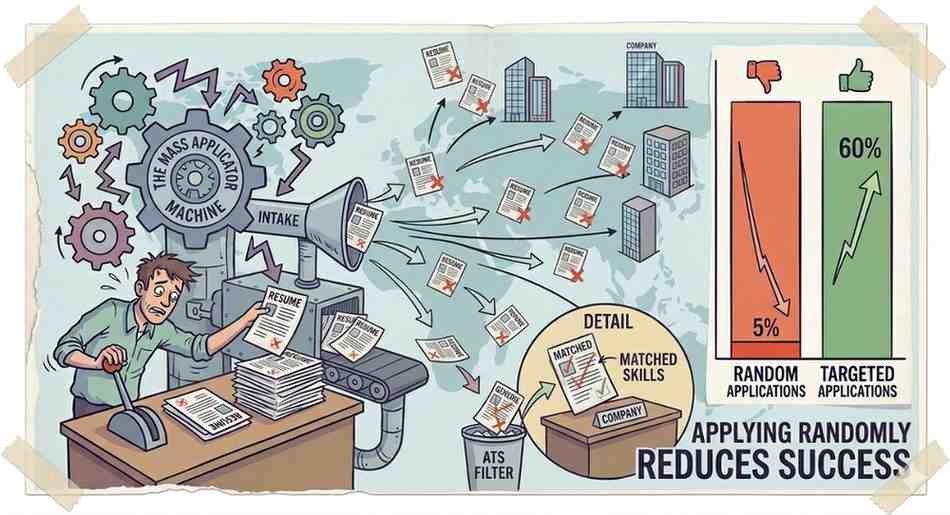
Instead of applying everywhere:
- Focus on suitable roles
- Research companies
- Customize applications
- Build relevant skills
- Network with professionals
Strategic applications produce better results than mass applications.
14. Missing Contact Information Creates Problems
This sounds simple, but it happens often. Recruiters reject resumes when candidates forget important contact details.

Essential Information
- Full name
- Professional email
- Phone number
- LinkedIn profile
- Portfolio link if relevant
Avoid unprofessional email addresses. An email like “coolgirl123” may reduce professional credibility. Simple details matter.
15. Fake Information Can End Careers
Some candidates exaggerate achievements or fake experience. Recruiters reject resumes when information seems unrealistic or inconsistent. Background verification is common today.

Lying on a resume can:
- Damage reputation
- Cause job termination
- Reduce future opportunities
Authenticity is always safer than exaggeration. Highlight your genuine strengths confidently.
Recruiters Want Clarity, Not Complexity
Many people think complicated resumes look more impressive.
Actually, recruiters reject resumes that overcomplicate information.
Simple, direct communication works best.
Keep Your Resume Clear
- Use concise bullet points
- Avoid unnecessary jargon
- Focus on achievements
- Organize sections logically
- Prioritize readability
A recruiter should instantly understand:
- Who you are
- What you can do
- Why you fit the role
The Emotional Impact of Resume Rejection

Job rejection affects confidence deeply. Many talented people begin doubting themselves after repeated silence from recruiters. But remember this important truth: Often, recruiters reject resumes because of presentation issues, not lack of potential. A poorly structured resume can hide great talent. Improving your resume strategy can completely change your job search results. Do not treat rejection as proof that you are incapable. Treat it as feedback. Every improvement increases your chances. Clarity increases interview chances.
How to Make Recruiters Notice Your Resume ?
Now that you know why recruiters reject resumes, let us focus on solutions.
| Step | Action | Purpose |
|---|---|---|
| 1 | Clean Layout | Easy to read |
| 2 | Customize Resume | Match job role |
| 3 | Add Keywords | Pass ATS filters |
| 4 | Show Achievements | Prove impact |
| 5 | Keep It Short | Improve clarity |
| 6 | Proofread | Remove mistakes |
| 7 | Strong Summary | Grab attention |
| 8 | Improve LinkedIn | Build credibility |
| 9 | Relevant Skills | Fit job needs |
| 10 | Stay Honest | Build trust |
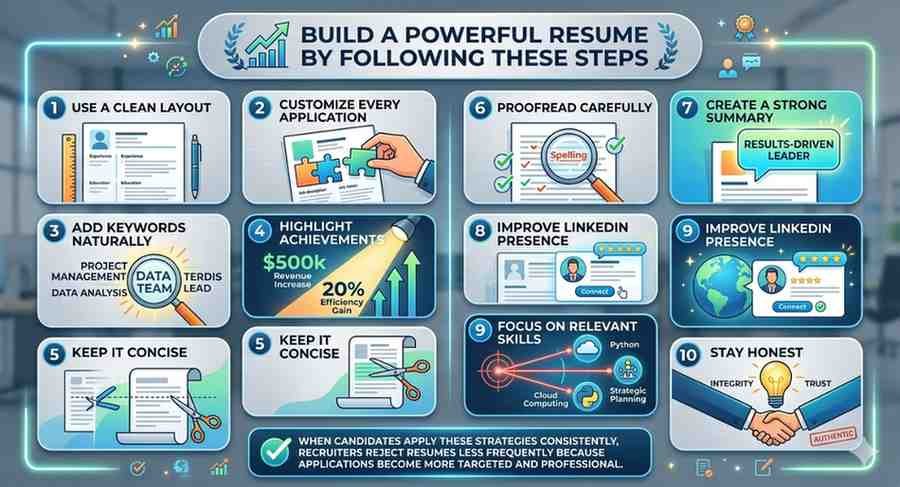
When candidates apply these strategies consistently, recruiters reject resumes less frequently because applications become more targeted and professional.
The Future of Resume Screening
Technology is changing hiring rapidly. AI tools now help companies filter candidates faster than ever before. This means resumes must be optimized not only for humans but also for software systems. Recruiters reject resumes faster in modern hiring environments because automation increases efficiency. Candidates who understand ATS optimization, personal branding, and strategic resume writing gain a major advantage. The future belongs to applicants who combine skills with smart presentation.

Final Thoughts
The reality is tough but important to understand. Recruiters reject resumes in just 10 seconds because they are overwhelmed with applications and forced to make quick decisions. In such a competitive environment, your resume must immediately communicate value, clarity, relevance, and professionalism.
A resume is not just a document. It is your personal marketing tool.
The difference between getting ignored and getting interviews often comes down to:
- Better formatting
- Stronger achievements
- Clearer communication
- Relevant keywords
- Smart customization
If you keep sending the same ineffective resume repeatedly, results may never change. But if you improve your strategy, optimize your content, and understand what recruiters actually look for, your opportunities can increase dramatically.

The next time you apply for a job, remember this: Recruiters reject resumes quickly, but a well-created resume can stop them instantly. And sometimes, those few seconds can change you entire career.