
India की plywood industry में business growth के लिए सिर्फ production capacity बढ़ाना काफी नहीं है। Manufacturers को यह समझना भी जरूरी है कि market में demand कहां से आ रही है, customers किस तरह के products prefer कर रहे हैं और किन segments में growth opportunities मौजूद हैं।
Housing, furniture manufacturing, commercial interiors और real estate activities plywood demand को influence करते हैं। साथ ही, modular furniture और quality products पर बढ़ता focus manufacturers के लिए नए business opportunities create कर रहा है।
अगर आप current plywood market demand को समझकर अपनी business strategy बनाना चाहते हैं, तो आपको customer preferences, product categories और dealer network पर ध्यान देना होगा।
इसीलिए इस guide में 10 practical strategies बताई गई हैं, जो plywood manufacturers को market demand समझने और business expansion plan करने में मदद कर सकती हैं।

Current Plywood Market Demand को प्रभावित करने वाले Factors क्या हैं?
India में plywood demand residential construction, furniture manufacturing, renovation और commercial interior projects से जुड़ी हुई है।
IMARC Group की report के अनुसार, Indian plywood market FY 2024–25 में लगभग ₹235.1 billion का था। Report में FY 2033–34 तक इसके लगभग ₹387.9 billion तक पहुंचने का अनुमान दिया गया है। ये market estimates हैं; actual demand market conditions के अनुसार बदल सकती है।
इसलिए current plywood market demand को समझने के लिए manufacturers को market trends, customer requirements और competition पर भी focus करना चाहिए।
असली Solution है Demand-Driven Growth Strategy
सिर्फ market growth के आंकड़ों के आधार पर production बढ़ाना सही approach नहीं है। Manufacturers को identify करना चाहिए कि उनके target markets में कौन-से products की demand है और customers किन factors के आधार पर purchasing decisions लेते हैं।
Demand-driven strategy production planning, inventory management, dealer expansion और sales forecasting को improve करने में मदद कर सकती है।

10 Strategies to Understand Current Plywood Market Demand
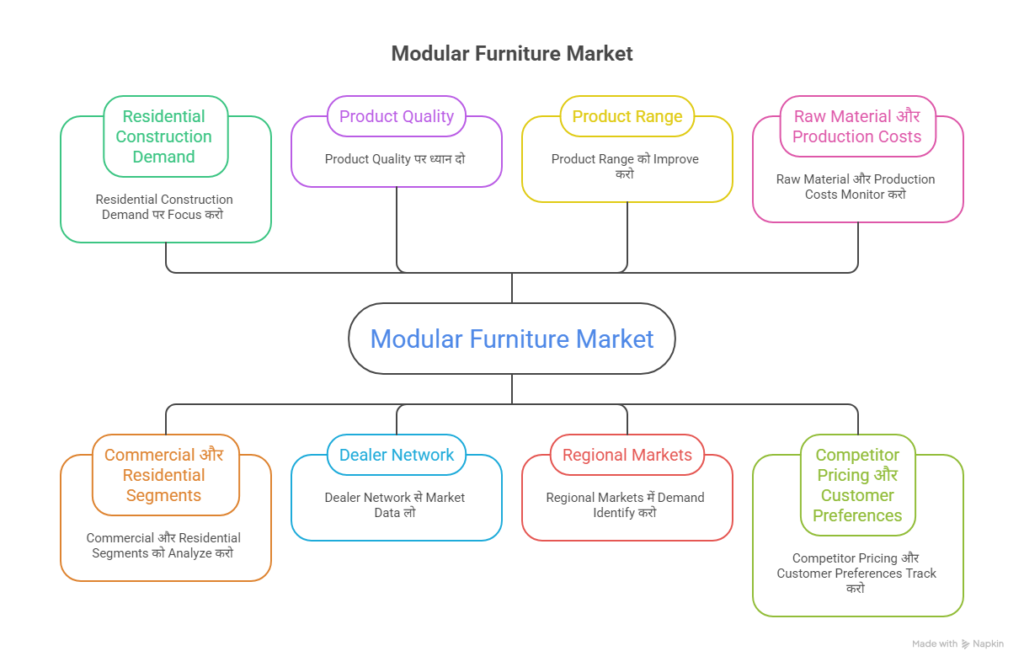
1. Residential Construction Demand पर Focus करो
Residential construction plywood industry के लिए एक important demand driver है। घरों में furniture, wardrobes, kitchen cabinets और interior work के लिए plywood का इस्तेमाल होता है।
Manufacturers को local housing activity और dealer enquiries monitor करनी चाहिए। इससे current plywood market demand को समझने और production planning improve करने में मदद मिल सकती है।
2. Modular Furniture Market को समझो
Modular kitchens, wardrobes और ready-to-assemble furniture manufacturers के लिए business opportunities create करते हैं।
Manufacturers को furniture makers और interior contractors की requirements समझनी चाहिए। इससे वे relevant product categories पर focus करके changing customer demand के अनुसार अपनी offerings plan कर सकते हैं।
3. Commercial और Residential Segments को Analyze करो
Residential और commercial markets की requirements अलग हो सकती हैं। Residential projects में home furniture की demand होती है, जबकि commercial projects में offices, retail stores और hospitality interiors के लिए plywood की जरूरत पड़ सकती है।
दोनों segments की demand और order patterns को अलग-अलग track करने से current plywood market demand का बेहतर assessment किया जा सकता है।
4. Product Quality पर ध्यान दो
Customers purchasing decisions लेते समय product quality, durability और brand reliability को consider करते हैं।
Manufacturers को consistent quality, proper testing और applicable certification requirements पर focus करना चाहिए। इससे dealers और customers के बीच trust build करने में मदद मिल सकती है।
5. Dealer Network से Market Data लो
Dealers manufacturers को ground-level market information provide करते हैं। उन्हें पता होता है कि customers किन products की enquiries कर रहे हैं और competitors कौन-से offers दे रहे हैं।
Regular dealer feedback और sales reports analyze करके manufacturers current plywood market demand में होने वाले changes identify कर सकते हैं।
6. Product Range को Improve करो
Furniture makers, contractors और residential customers की requirements अलग-अलग हो सकती हैं।
Manufacturers को commercial plywood, calibrated plywood और अन्य relevant product categories की demand evaluate करनी चाहिए। इससे unnecessary inventory कम करने और production capacity का बेहतर इस्तेमाल करने में मदद मिल सकती है।
7. Regional Markets में Demand Identify करो
India के अलग-अलग regions में construction activity, furniture manufacturing और dealer networks की requirements अलग हो सकती हैं।
नए markets में expansion करने से पहले local demand, competition, transportation costs और distribution coverage evaluate करें। इससे suitable markets identify करना आसान होगा।
8. Raw Material और Production Costs Monitor करो
Market demand बढ़ने का मतलब हमेशा higher profitability नहीं होता। Raw material availability, transportation और production costs manufacturers के profit margins को affect कर सकते हैं।
Manufacturers को raw material planning, wastage control और production efficiency पर focus करना चाहिए, ताकि demand के अनुसार production बढ़ाते समय costs भी manage की जा सकें।
9. Competitor Pricing और Customer Preferences Track करो
Customers products select करते समय price, quality, durability और brand reputation जैसे factors consider कर सकते हैं।
Dealer feedback, customer enquiries और sales data analyze करके manufacturers current plywood market demand को बेहतर समझ सकते हैं और अपनी pricing तथा product positioning में suitable changes कर सकते हैं।
10. Demand Forecasting को Systematic बनाओ
Manufacturers को केवल previous sales numbers के आधार पर production plan नहीं करना चाहिए। Changing market conditions को भी consider करना जरूरी है।
एक structured demand forecasting process में इन factors को track करें:
- Monthly और quarterly sales trends
- Dealer enquiries और confirmed orders
- Product-wise demand
- Regional sales performance
- Inventory levels और production capacity
Regular demand reviews से manufacturers current plywood market demand के अनुसार production और inventory planning improve कर सकते हैं।
Employment Mantras कैसे मदद कर सकता है?
Plywood manufacturing business में market demand manage करने के लिए सही products और production planning के साथ skilled workforce और capable sales teams भी important हैं।
Employment Mantras businesses को recruitment और workforce planning में support करता है, ताकि manufacturers अपने business requirements के अनुसार suitable talent identify कर सकें।
अगर आपकी company current plywood market demand के अनुसार sales और distribution operations expand करना चाहती है, तो trained professionals business growth और operational efficiency को support कर सकते हैं।
Manufacturers को इन areas में support मिल सकता है:
- Sales और business development professionals की recruitment
- Production और operations roles के लिए suitable candidates
- Dealer management teams के लिए manpower planning
- Regional sales expansion के लिए recruitment
- Long-term business growth के लिए talent planning
Employment Mantras के बारे में जानें और अपनी recruitment requirements के अनुसार suitable workforce strategies explore करें।
Real Example: मान लीजिए एक plywood manufacturer को dealers से modular furniture और calibrated plywood की enquiries बढ़ने का पता चलता है। Company अगर sales data, dealer feedback और production capacity analyze करती है, तो वह अपनी product planning और sales team allocation को market requirements के अनुसार adjust कर सकती है।
Conclusion
Current plywood market demand को समझने के लिए manufacturers को सिर्फ market growth reports पर depend नहीं करना चाहिए। Residential construction, modular furniture, commercial interiors, dealer feedback और customer preferences को भी analyze करना जरूरी है।
Plywood businesses को product quality, production costs, regional demand और distribution network पर focus करना चाहिए। Systematic demand forecasting और trained sales professionals business expansion को support कर सकते हैं।

Employment Mantras recruitment और workforce planning में support करके manufacturers को sales और operations teams के लिए suitable talent identify करने में मदद कर सकता है।
सिर्फ market growth के पीछे मत भागिए—demand को समझिए, सही opportunities identify कीजिए और अपने business को sustainable growth के लिए तैयार कीजिए।