
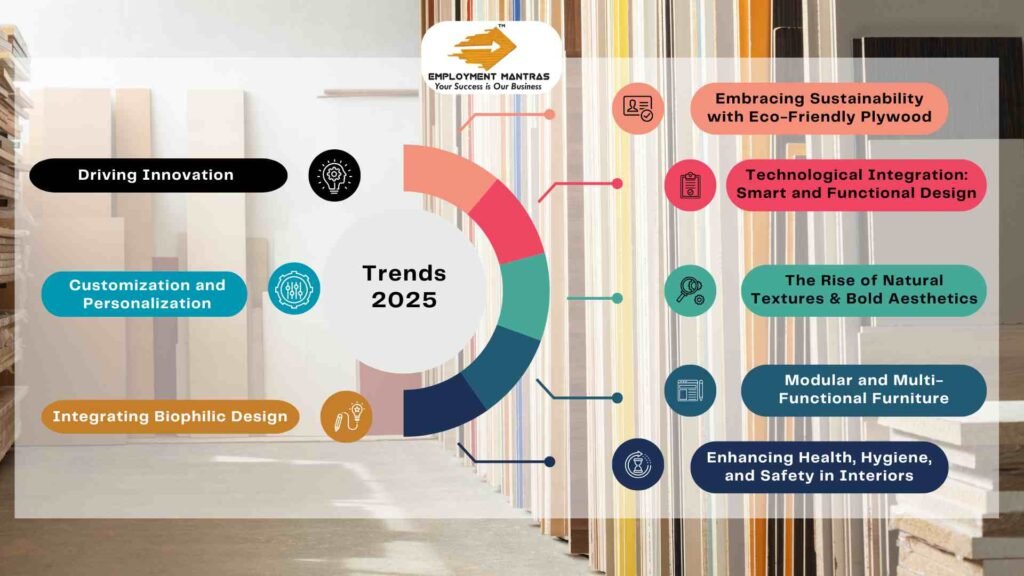
As we enter 2025, the interior design industry is undergoing a revolutionary transformation driven by material innovation, technology, and sustainability. Plywood and laminate, once seen as simple construction materials, are now redefining aesthetics and functionality. For industry leaders and HR professionals, staying ahead of these trends is crucial to not only meet consumer demands but also hire and retain the talent that can shape the future of design. Here’s a refined breakdown of the top trends revolutionizing interiors in 2025 — and why they matter for your business.
1. Embracing Sustainability with Eco-Friendly Plywood
Sustainability is now central to design. Businesses and consumers alike are leaning toward materials that reflect environmental responsibility.
- Renewable Resources and Responsible Sourcing:
Plywood manufacturers are increasingly using recycled and sustainably sourced wood, often backed by certifications like FSC.
- Low-VOC and Formaldehyde-Free Adhesives: As indoor air quality becomes a priority, the demand for low-VOC and toxin-free adhesives is on the rise.
- Green Building Certifications: Meeting LEED and other green building standards is no longer optional but essential.
Why it matters: Eco-conscious design is now a business necessity. Brands embracing green practices not only meet compliance but gain trust and loyalty from conscious consumers.
2. Technological Integration: Smart and Functional Design
Technology is bridging the gap between aesthetics and automation, especially in plywood usage.
- CNC Machining and Digital Fabrication: CNC tools offer unparalleled design precision and customizability.
- Smart Furniture and Built-In Tech: Wireless charging, LED lighting, and sensor integration are revolutionizing furniture design.
- Modular Systems for Urban Living: Digitally crafted modular pieces cater to small, adaptable living spaces.
Why it matters: The fusion of design and tech requires teams that can navigate both aesthetics and automation. Investing in tech-savvy talent is key.
3. The Rise of Natural Textures and Bold Aesthetics
Consumers crave authenticity, warmth, and visual storytelling in their spaces.
- Natural Grain Showcasing: Light stains and unfinished plywood highlight organic textures.
- Bold Colors and Artistic Laminates: Designers are embracing vibrant colors and daring patterns.
- Cultural Fusion: A blend of heritage-inspired design and modern execution is dominating interior themes.
Why it matters: The shift toward visual authenticity demands creative minds who understand design storytelling, not just product specs.
4. Space Optimization with Modular and Multi-Functional Furniture
In compact urban environments, every inch counts.
- Modular Solutions: Plywood is increasingly used in flexible systems like shelves, dividers, and transformable tables.
- Multi-Functional Pieces: Beds with drawers, desks that become dining tables—utility and form are merging.
- Customized Workspaces: The remote work era demands home-office integration in design.
Why it matters: Customization and adaptability drive purchases. Manufacturers need precise fabrication teams and creative engineers to deliver versatile furniture.
5. Enhancing Health, Hygiene, and Safety in Interiors
Post-pandemic awareness has made cleanliness a design imperative.
- Anti-Bacterial Laminates: Surfaces now come with coatings that minimize germs.
- Fire and Moisture Resistance: Upgraded safety features are being built into plywood products.
- Durability for the Long Term: With higher consumer expectations, durability is a must.
Why it matters: Product innovation in hygiene and safety opens opportunities for health-conscious customers and requires R&D-backed hiring.
6. Integrating Biophilic Design
Biophilic design — the harmony of indoor spaces with nature — is becoming mainstream.
- Organic Materials: Bamboo, reclaimed wood, and earthy finishes are in high demand.
- Natural Light and Green Spaces: Interiors are being redesigned to enhance light and integrate nature.
- Indoor-Outdoor Fluidity: Seamless transitions between spaces add value and wellness.
Why it matters: Biophilic trends demand a workforce that understands sustainability, wellness design, and nature-based aesthetics.
7. Customization and Personalization in Every Detail
Cookie-cutter designs are out—bespoke solutions are in.
- Bespoke Panels and Finishes: Custom plywood and laminates tailored to client vision.
- Client Collaboration: Designers now involve clients in the process, from sketches to execution.
- Diverse Finish Options: From matte to high gloss, personalization expands creative boundaries.
Why it matters: Personalization requires creative consultants, agile production teams, and client-facing professionals who can turn imagination into reality.
8. Driving Innovation Through Smart Home Integration
Smart homes are redefining the very structure of interiors.
- Built-in Sensors and Automation: Plywood panels now come with integrated tech for lighting, temperature, and security.
- Voice and App Control: Home elements are controlled digitally for seamless living.
- Efficiency + Style: Smart homes are merging high-tech functionality with luxury aesthetics.
Why it matters: Innovation in smart living means hiring talent that can collaborate across design, IT, and construction sectors.
Conclusion: Why Talent is the Key to Trend Adoption
These trends represent more than design—they symbolize a shift in how people live, work, and interact with space. As plywood and laminate products become more intelligent, sustainable, and stylish, the need for skilled professionals becomes urgent.
Enter Employment Mantras — your recruitment partner for the plywood and interior design industry. From hiring production managers and showroom consultants to compliance officers and product designers, we help you build a workforce aligned with the future of design.
Whether you’re adapting to modular innovations or adopting smart home tech, we deliver talent that understands your vision and transforms it into reality.
The People Behind the Panels
Design evolution depends on people—not just materials. Employment Mantras bridges the gap between modern plywood companies and skilled professionals who understand design, tech, sustainability, and manufacturing.
📌 For hiring support, training, and consultancy tailored to plywood, furniture, and design brands, visit:
👉 www.employmentmantras.com
Awesome! Its genuinely remarkable post, I have got much clear idea regarding from this post